
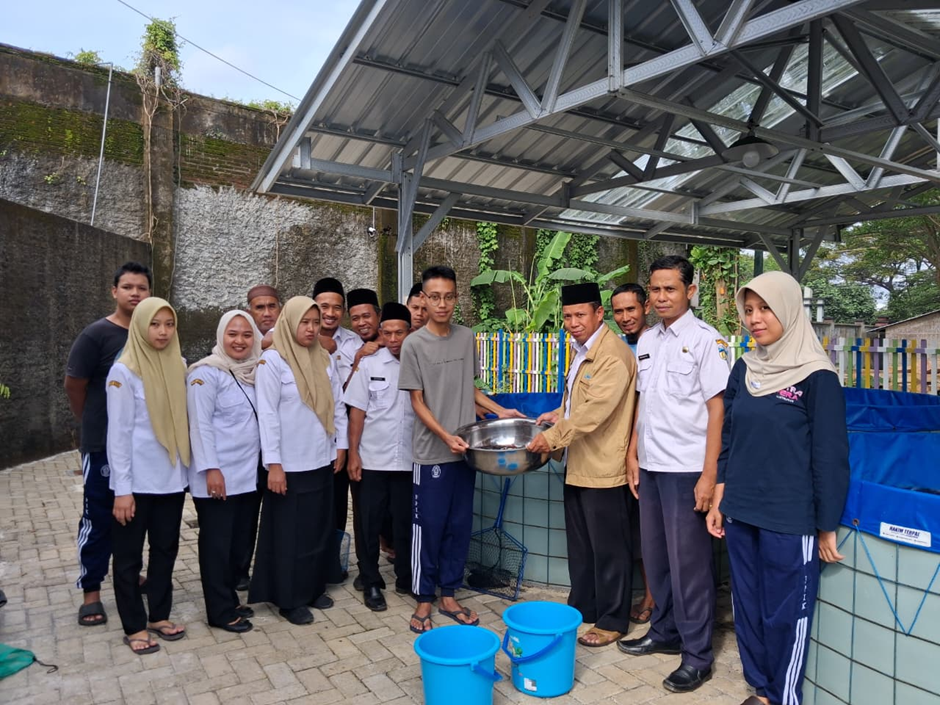
The bright morning atmosphere in Tegalsambi Village turned into a spirited gotong-royong (mutual cooperation) event. From 07:00 to 09:00 local time, a ceremonial catfish harvest took place lively, marking the success of a cultivation program initiated by students of Fishery and Marine Technology and Business (TBPK) at Diponegoro University in collaboration with village officials. (The activity was held on March 4, 2026, but the spirit of togetherness had been felt from the very beginning).
The three TBPK students who served as the main drivers of this collaboration are Abid Azka Maulana, Aditya Cahyo Nugroho, and Fika Nur Febrianti. They went directly to the cultivation site, helping to cast nets and lift thousands of plump catfish. The harvest results were deemed very satisfactory, providing tangible evidence that synergy between academics and the village community can boost fisheries sector productivity while strengthening food security from the grassroots level.
The Head of Tegalsambi Village, in his remarks during the harvest, could not hide his pride. “This program is a real collaboration with TBPK Undip students. It also implements the Asta Cita (Eight Goals) of the President of the Republic of Indonesia, Mr. Prabowo Subianto, regarding food security in Tegalsambi Village. The harvest is satisfying, and God willing, it will bring great benefits to the surrounding community,” he said enthusiastically.
What is interesting is that the cultivation carried out is not only profitable but also highly efficient. Abid Azka Maulana, as the student team coordinator, explained, “This catfish cultivation is relatively very fast. With a capacity of 1,500 seeds per pond, we were able to harvest in just 2 months. This is a great opportunity for a denser and more profitable production cycle.”
Real Support for the Sustainable Development Goals (SDGs)
More than just a grand harvest, this catfish cultivation program directly contributes to the achievement of the Sustainable Development Goals (SDGs), specifically points 1, 2, and 14.
- SDGs 1 (No Poverty): With a fast and efficient harvest cycle (2 months), the sale of catfish provides additional income for the farmer groups and participating villagers. This business opportunity opens economic access for the people of Tegalsambi Village, reduces household expenditure burdens, and creates informal jobs in the inland fisheries sector.
- SDGs 2 (Zero Hunger): This catfish cultivation provides an affordable and easily accessible source of animal protein for the local community. With stable and efficient production, food security at the village level improves. Villagers no longer need to rely entirely on external supplies.
- SDGs 14 (Life Below Water): Although catfish cultivation is carried out in freshwater, this program indirectly supports the health of marine ecosystems. With increased efficient freshwater fish production, the pressure of overfishing on marine fish can be reduced. The community is encouraged to consume sustainably farmed fish, thus helping to maintain the balance of fish stocks in nature.
This success was warmly welcomed by the local villagers who came to witness it. With this mass harvest activity, it is hoped that catfish cultivation will not remain merely a collaborative project but will continue to be developed into a sustainable solution to improve food security, alleviate poverty, and preserve marine fishery resources a concrete step from Tegalsambi Village towards achieving the SDGs 2030.